
Working In the Skilled Trades (5 Lessons learned)

Reflections Working for my dad in the Trades
You might be here because you’re wondering what working in a woodworking shop is like. You might be looking to start or grow a business in one of the many skilled trades. My real hope is that something from my experience and lessons sticks. That it inspires you to think slightly differently or learn something new about yourself that you can take with you.
If you feel inclined, I end the article with an ode to a regular workday at the shop in my early 20s. A creative writing exercise to get my reflection brain going. You may notice from my writing that I don’t have any inner thoughts or dialogue. In part, because I can’t remember what I was thinking about but also to give you, my friend, space to imagine.
5 Things I Learned Working in the Skilled Trades (For My Dad)
1. How to organize your workspace where all tools are accessible
My dad was orderly but not obsessive about it. He was particular about things being in the same place but did not need a space to look immaculate. As long as the functionality was there, he seemed content.
That rubbed off on me. I like having predictable places for tools I work with and it’s disruptive when they’re not.
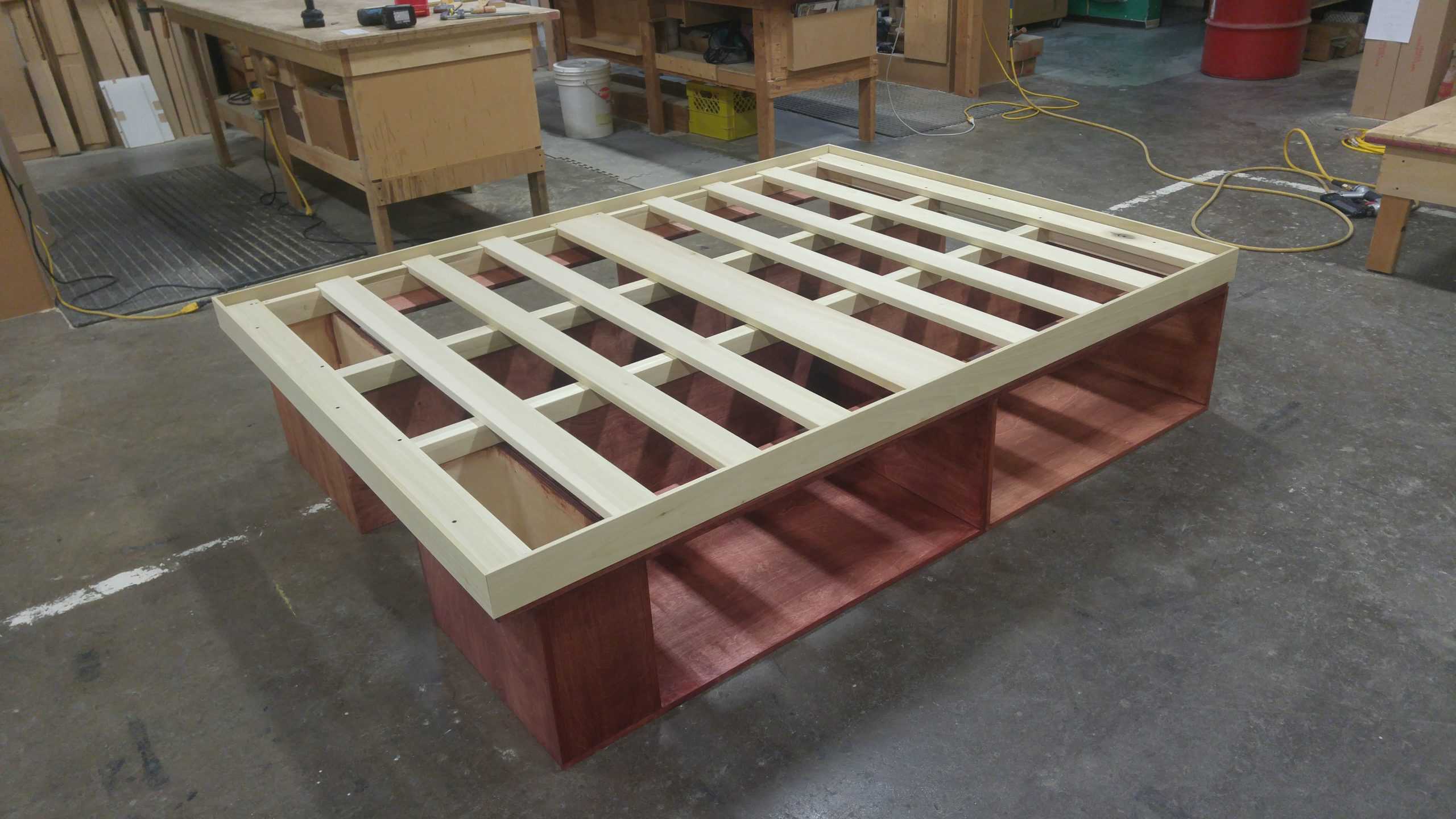
In my dad’s shop, there were three of us working the most years so we each had our own workbench station. I got the opportunity to build my own when I was working for my dad full-time. It was quite basic as we didn’t need functionality for fine woodworking projects but it did give me more pride and ownership over the space. My workbench was on the other side of the one shown in the photo.

Tools in the space:
- F-Clamps, lots of them. Generally 2 milk crates full
- Tape Measure
- Torpedo level
- Mid size level
- Square
- Putty and Putty knife
- Dust Mask
- Safety Glasses
- Ear Muffs
- Makita Drill
- Makita Impact driver
- Nail gun with spare nails
- Air blow gun
- Titebond Wood glue
- Wood screws in various lengths
- Collection of Chisels – one old one that could be used for grunt work
- Hammer
- Extension cords
- Sand paper of various grits
- Orbital sander
- Belt sander
- Trim Router
Each of these had a spot I could grab and use within reach of my workbench.
2. Ownership (Part 1 and 2)
Ownership – Part 1
There’s a major difference between working for someone else and owning a business. When you’re an employee, you are completely fine with leaving work for the next day. Even if it means driving back to a job site 45 minutes away.
- One massive shift in ownership is focusing on time, cost, and profit. Because your decisions make a massive impact.
- Let me paint a common scenario working with my dad:
- Let’s say my dad and I generally worked until 4 pm to hit 8 hours. We’re on day 4 of a new house in West Vancouver (45 – 60 min drive from home) installing the railings and stair treads. It’s hitting 3:30 pm and we know there are still at least 2 hours left before the job is complete. You can bet there is going to be a phone call home to Mom saying, we’ll be late for dinner.
- I learned about ownership by soaking in my dad’s decision-making, his words, his actions. Experiencing it through someone else versus actually owning something yourself is entirely different. But it gave me a taste and I haven’t been able to forget it.
I’ve learned that ownership starts and ends with you. That means you’re dealing with sales, doing the work, customer service, invoicing, collecting payment, ordering supplies and materials, tracking finances, ensuring you have enough money to cover expenses, and so much more.
With the challenges comes an upside. There is the freedom to spend time how you need or want and you never have to ask a boss for time off. With that freedom comes a weight of responsibility. But you have the power to choose.
Ownership – Part 2
I started working for my dad in elementary school. We headed to his shop the occasional evening or Saturday when he had to work. My older sister and I would clean off the sawdust from the machinery and sweep it into piles. Then we scooped it up and put it in the scrap bin.
One memory from one of those nights is etched in my memory. I was sweeping and was on a roll. I wasn’t the fastest at sweeping but I was meticulous. Well, that level of detail brought me a little too close to a group of standing stair railing posts. They were either just assembled or had been stained/painted and were standing to dry.
I swept too close to them and bumped (at least) one of them over. I don’t remember what kind of damage it caused. But I do remember that my dad made me apologize to my uncle (my dad’s brother worked with him at the time) the next time I saw him.
The lesson that stuck with me on that day was one of ownership. Take ownership of the mistakes you’ve made, even the unintentional ones. So nothing remains hidden, even if the mistake is embarrassing. First of all, you will gain respect, even if it doesn’t feel like it at the moment. You will be trusted more.
From that day on, many more and worse mistakes were made working with my dad that cost him money and time. I’m sure he felt it. He was the owner, he bore the cost. And sometimes he got upset but never stayed that way. The slate was wiped clean each time. I never owed him anything because of those mistakes. What a gift to be shown that kind of grace.
That taught me to be more gracious with other’s mistakes. Not perfect, but more.
3. How to get more projects booked
Now you might think I’m going to be talking about some kind of fancy Marketing strategy here. But that is not at all what I learned watching my dad.
My dad did not do much marketing beyond having a business card to hand out and he was searchable on Google. All those years, he never had a website (still to this day).
Want to know the keys to how busy he has been over the years? It’s simple. He took enough time to ensure the project was done with excellence. Every single time. He made sure the project was built solid, and that it looked amazing.
The second key was HOW he worked. When builders asked for a timeline, my dad stuck to it. And if he couldn’t, he let them know early.
He priced fairly, always completed the job, and showed up when he said he would. He was reliable and easy to work with. Once he worked for a new builder, he often got the rest of their projects. And often he would get referral phone call inquiries too. Even other trades would refer him to a builder because of how he worked on job sites and the quality of his work.
4. How to use Tools
As a child, when my dad worked around the house, I was always right there, wanting to help, wanting to hold and use the tool.
When my dad mowed the lawn, I’d be outside wanting to push.
When he was hammering nails, I needed to hold a hammer and hit some nails too.
When he was drilling holes or screwing something together, I wanted in.
I got early exposure and access to tools in childhood. And so much more experience working with my dad. This has been an amazing gift in my life. Because now I have the foundational skill and experience of working in a skilled trade. That will never leave.
It gives me another option to provide for my family. It gives me the foundation to make different pieces of furniture. And to perform renovation projects on a home one day.
Most tools were common woodworking tools but even that has been so helpful. I am confident knowing I can take some lumber and turn it into something that I’ve seen or can imagine in my mind.
5. How to problem solve (and persist when something is difficult)
I saw my dad do this so many times out of necessity. One project I remember in particular. He was building an outdoor kitchen in our shop that would end up in the Okanagan. He would draw up a plan by hand and then start building.
Inevitably, there would be obstacles and decisions to make along the way. Maybe pieces weren’t quite fitting the way or in the order he had planned on paper. He was never phased. There was always a way to make it work and make it look amazing.
Beyond learning to problem solve, one of the byproducts of watching my dad was how to handle hard things.
Some things came easily to me growing up. Like sports. I mean I worked at it but it felt easier than most things because I was having fun. Compare that with learning high school math. That was challenging for me for a few reasons. But the main point is that it was something hard that I would tend to give up on or do the bare minimum.
I would say, “Well I’m not like those other kids who are good at math. I’m only good at sports, working with tools, etc.” I centered my identity around what was easier (for me) and in skills I had already built a solid foundation.
Out of high school, I kept working for my dad until I started itching for something more. He had suggested studying business a few times. I think with some hope that I would join him and help him on that side of his business.
I was not confident heading into College. But after committing to a two-year Business diploma, I pushed and saw it through. I did something that I thought I wouldn’t be good at and persevered. I was learning how to embrace intellectual challenges and push through. And this growing ability did end up propelling me on to complete a four-year Business Degree.
A lot of that pushing and perseverance came from working with my dad. He encountered obstacles in projects or in the business itself. Watching him figure out a way through was inspiring.
If I’m being honest, it makes me emotional. Thinking about some of those challenging periods where he wasn’t sure how to go on. Where deadlines were too tight and we had to work evenings and weekends to get a project out the door. When shop work was slow and the revenue wasn’t covering those bills. I imagine my dad questioning in his mind, “Is this still worth it? How am I going to do this?” The emotion of those moments is still palpable.
These experiences working with my dad built my character over the years. To get a better sense of the type of projects I worked on over the years, I thought I’d go WAY back to the early years.
Experience in the Trades
It started with sweeping my dad’s wood shop in elementary school. Some evenings and weekends, we would head to the shop after dinner when my dad had to work and sweep up all the sawdust left behind. As I got to high school, I began working with him in summers and on spring break.
I loved the change of pace of the Summers working with my hands and with my dad. By June, I was through with sitting in classrooms all day. I was itching to get outside, to move, to work with my hands for a change.
My experience working in the skilled trades with my dad has been an amazing gift. I kept working with him after high school for a few years before dropping to part-time work so I could go through college.
Here’s a summary of what kind of projects I worked on either with my dad or on my own.
Installing Stair Railings
- Included wrapping posts for some decoration. Woah fancy.
- A lot of cutting spindles, either metal spindles on the metal band saw or wood spindles on job sites.
- An absurd amount of installing kickboard, baseboard, and trim mouldings. Here I learned how to match wood grain.
- Getting the spindles itemized, alphabetized, and jazzercised for installation.
- Once we installed the posts, I cut the railings to length and then attached them to the post.
- Installing wall rails. Because safety.
- Installing stair risers, and shoes/caps. Because stairs gotta dress up nice too.
- Glue-ups and installing curved railings. Mostly fun because you’re playing with so much glue and then you race to get the clamps tightened before the glue sets.
- A fun one I worked on was installing a balcony rail as part of my church’s renovation project of an old chapel.

Custom bulk food cabinets for grocery stores
We got a lot of work from a company that sold bulk food bins and cabinet systems to grocery stores to help improve their sales. So we built most of the bulk food cabinets out of plywood or MDF with melamine. Here’s a list of some of the major grocery stores in Canada that installed our cabinets in their bulk food sections.
- Sobeys
- Safeway
- SaveOn Foods
- Thrifty Foods
- And several smaller chains
During the Sobey’s era, there were hundreds of cabinets we needed to build. We needed to grow our team of four. So my dad hired at least four more guys to help prepare the parts and assemble the cabinets. Now that was a buzzing atmosphere.


Skimboards
- For at least two Spring/Summer seasons I made skimboards. I glued, laminated, cut, and sanded all the skimboards for a Canadian company, Kayotics. Even though it was repetitive, I loved it. I was already into skimboarding and had made a few boards myself.
- Making skimboards meant we needed a vacuum press with a custom-built table. Now I was able to make some skimboards and longboards for myself. Can’t seem to find a skimboard photo but below is the side profile of one of the longboards I made with the vacuum press.

Fireplace Mantles
My dad used to build these all the time. Build fireplace mantles out of MDF or maple-veneered plywood and then install them. It was not complicated, but somewhat intricate. I generally would just look at one of the sample mantles already built and copy it. A lot of gluing, nailing, filling nail holes, and sanding to get it ready to install.
Other projects
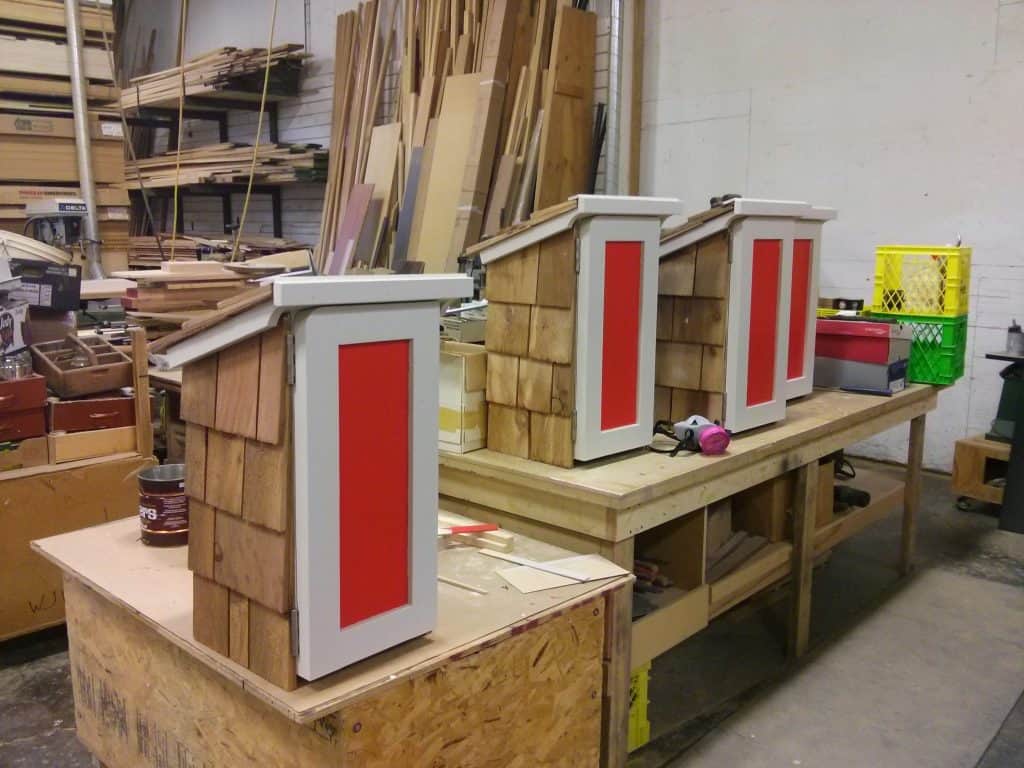
Fire hydrant storage huts
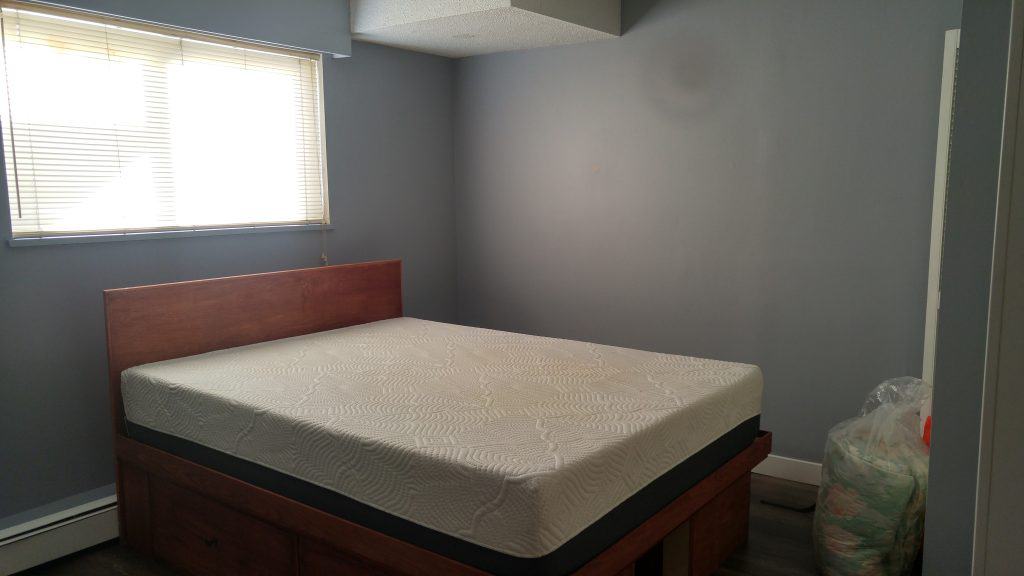
- A bed frame for my wife and I. Fun to build but I would do things a lot different now. This one was mostly out of plywood we already had at the shop.


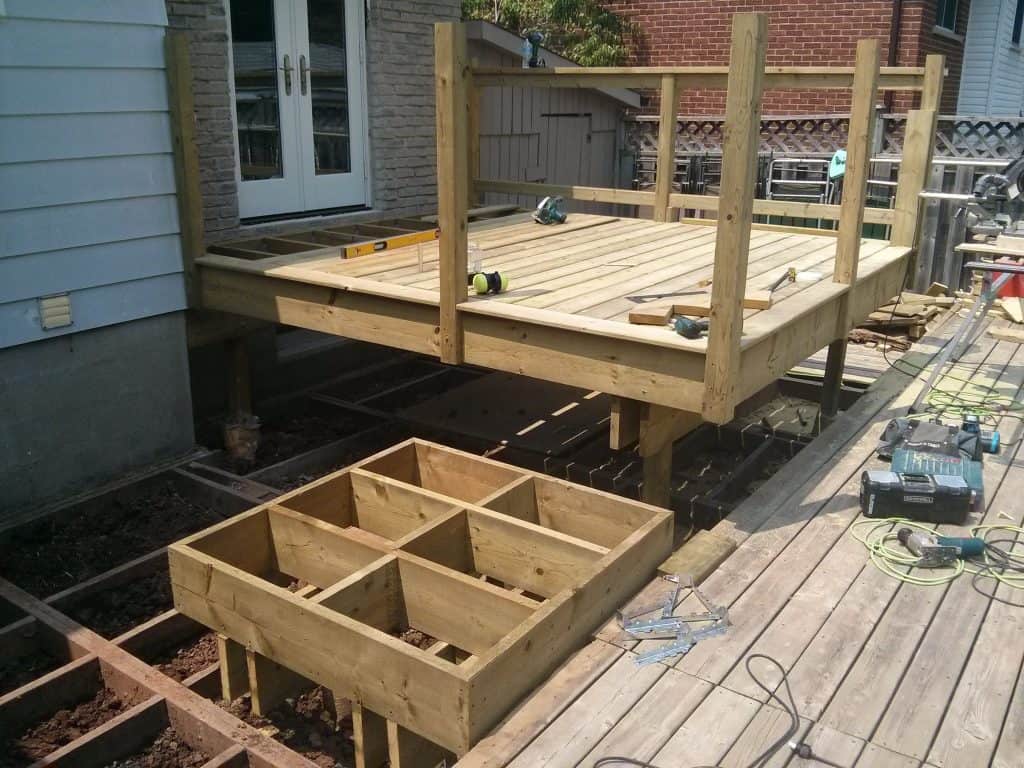
Helped demo and build a deck on an unrelated summer job one Summer in Toronto
Much of the demolition and renovation work in a Toronto condo
- Installed kitchen cabinets
- Installed trim and baseboard
- Installed laminate flooring
My wife’s engagement ring box crafted out of purple heart wood
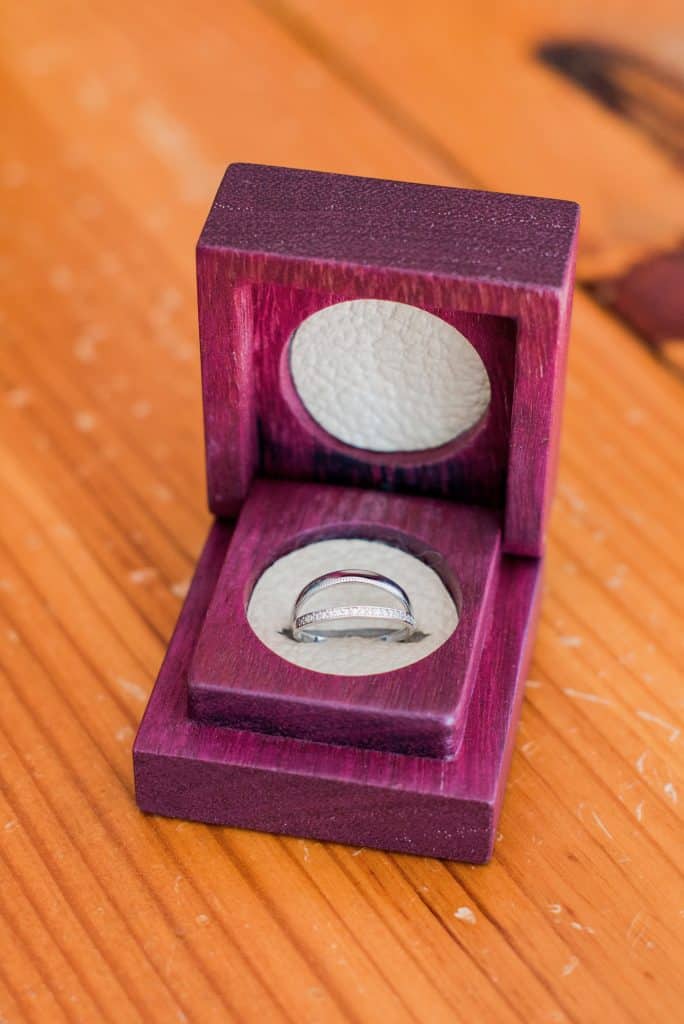
This ring box was created with some very simple woodworking but I was glad it worked so well!
Psssst. The ode is next. But if you want to skip, no hard feelings. You can head straight past to dive into some of my final reflections.
An Ode to Working in the skilled trades
Jolted out of bed at 6 am by my cantankerous alarm, I notice the glow of the sunrise.
I stretch. I rise. I yawn.
My dad’s already up, eating homemade buns and drinking instant coffee. With a solitary drop of milk.
I grab two buns and warm them in the oven. Peanut butter and honey next. I don’t drink coffee yet.
We start the 10-minute drive around 6:45 am.
Unlock the door. Shop lights on. I wander to the corner and flick the compressor on. The silence breaks as the motor fills the warehouse.
Today is a cutting day. I grab the cut list from the boss, Dad. He heads to his office for the morning. These bulk food cabinets will be made of 5/8” plywood with laminate.
Forklift time. I take a look at where the lift of plywood is sitting. Need to move a lift of 1/2 inch melamine off the top first.
I lift the forks above my head and ease them under the melamine. I pull the lever to lift. Reverse, turn, clear the rest of the lifts stacked, lower, and stop. Hop out and grab some blocking supports for the stacks of wood. Make sure there are three lined up on the floor where the melamine is going to sit.
Lower the lift, reverse. Lift forks, forward under the plywood, lift, reverse. Forward toward the saw. After resting the plywood on the blocking beside the saw, it’s time to cut.
The gable length is 80” tall. I make a mark on the plywood. I mark off 16” and set the saw fence to cut off 16” to get the 80” length I need.
I grab the 4 by 8 sheet of plywood, spin and drag it into position. Pause for a breath. Ear muffs on. Eye protection with kicks and scratches on. Now peering through knicks and scratches, it’s go time. I flick the saw switch on. The blade whirs to life.
I put my 150 pounds into the piece of plywood to get it moving. The sliding table helps. Widening my grip, I push at an angle forward and to my right to keep the plywood tight on the saw fence. Let the ripping begin.
After the first cut, I push the 16” piece away from the blade. Walking between the plywood waiting to be cut and the table saw, my tool companion for the day, I grab the now 4” x 80” piece of wood and lift it on end. I slide my right hand underneath and hoist it up, holding the opposite top side with my left. I heft it back around the lift, bend, grunt, and place it on a dolly. Then back around to grab the 16” cut and lean it up against the racks of wood near the saw.
Cut piles are growing. By coffee break, those stacks will have reached their peak. Then ripped again into their useful sizes. Only to move to their next station, and worked on again to become useful members of their new cabinet home.
Today is a cutting day. Lift, push, cut, pull, lift, lower, and lift again.
Reflections
Working in the skilled trades with my dad is an experience I’ll always be grateful for.
I love that I was able to spend all that time with my dad in high school and three years post-high school. Time spent driving to work, job sites, suppliers, and back home again. Time spent on job sites, and in the shop. Learning and growing in discipline, hard work, planning, and thinking. Learning how to match grain, use tools, and make a straight edge on the table saw.
My experience of woodworking with my dad has shaped me and I’m uncovering even more ways, with each new season of life. It taught me to think creatively, to problem solve, and to figure out solutions quickly. That has been a tremendous help as I transitioned to the world of Marketing and Fundraising for a non-profit. It’s helped me have the confidence that I can learn new skills.
- Like building a website.
- Or writing compelling website copy that tells the story of your business.
- Like running fundraising campaigns that have generated over $500K since 2018.
- Or how to craft compelling fundraising emails and letters that connect with donors and convert.
And now I want to help you get some of those same benefits of starting a career or starting and operating a business in the skilled trades. So while I’m writing and building out startskilledtrades.com, I’m also helping construction and trades business owners start and scale their businesses with Copywriting + Marketing Strategy services at andrewwarkentin.com, my marketing agency site (under construction). In the meantime, feel free to email andrew@andrewwarkentin.com to get in touch.
If you’re starting a construction business or already own one, here are some ways I can help you right now:
- Content Marketing – Apply the right content levers to help you reach your ideal customer and land your ideal jobs while recruiting your ideal team.
- Source and Write Client Testimonials – that get you more business even if you’re just starting
- Brand Guide – to help you always put your best voice forward no matter who’s in charge of social or website content
- Website Copy – to help you describe what you do and how you solve your reader’s main problems so they’re ready to become a client
- Project Descriptions – to help showcase your best project work on your site to “sell” your services without selling


